
Demi's 5 thoughts on design
Demi's 5 thoughts on design
Design of intangible services or systems can be confusing to understand. I say: before you build a chair, you think about who needs it, how it should feel, and what it is for. That thinking is exactly what design still does in other contexts.
Design of intangible services or systems can be confusing to understand. I say: before you build a chair, you think about who needs it, how it should feel, and what it is for. That thinking is exactly what design still does in other contexts.
In processes built around asylum and migration, designers bring in the much needed human perspective, with the objective to make positive change.
In processes built around asylum and migration, designers bring in the much needed human perspective, with the objective to make positive change.
A lot of my work is not designing things. It is bringing people and their thoughts together so a project can actually move forward.
A lot of my work is not designing things. It is bringing people and their thoughts together so a project can actually move forward.
As a consultant you advise but rarely see the implementation and impact of your work. I wanted to see whether anything I worked on actually changed something, so I moved in-house.
As a consultant you advise but rarely see the implementation and impact of your work. I wanted to see whether anything I worked on actually changed something, so I moved in-house.
People are usually skeptical of design at first. That is fine. Give it time, trust your own perspective, and the value shows itself.
People are usually skeptical of design at first. That is fine. Give it time, trust your own perspective, and the value shows itself.
Want to know more or connect? Continue for the full article below
The full article
The full article
Finding design
Like several other designers, the choice to study it wasn't the first choice for Demi either. She got close to studying architecture instead. However, she eventually opted for something that felt both creative and technical and landed on Industrial Design at the TU/e (University of Technology Eindhoven) instead. After finishing her bachelor's degree, she knew she wanted to work on something more societal, as she was drawn to the more socially oriented side of the field. Before starting her master's, she spent a year working as a UX designer at a medical startup building an app and delivery service for people who depend on daily medication. It was there that she discovered she cared less about building the app itself and more about designing the service around it, the thinking that connects a need to a working system from start to end.
Like several other designers, the choice to study it wasn't the first choice for Demi either. She got close to studying architecture instead. However, she eventually opted for something that felt both creative and technical and landed on Industrial Design at the TU/e (University of Technology Eindhoven) instead. After finishing her bachelor's degree, she knew she wanted to work on something more societal, as she was drawn to the more socially oriented side of the field. Before starting her master's, she spent a year working as a UX designer at a medical startup building an app and delivery service for people who depend on daily medication. It was there that she discovered she cared less about building the app itself and more about designing the service around it, the thinking that connects a need to a working system from start to end.
Two ways of thinking about people
During her 2-year master, also at TU/e, Demi took a year out to do another master's at Utrecht University, studying Cognitive Psychology. She found a real overlap between the two fields, both concerned with solving problems for people while keeping the person in mind. What surprised her was a recurring assumption among her psychology classmates and teachers that designers do not consider the human side of what they make; that design is mostly about making things "look good." It struck her as exactly backwards, since human-centered thinking is what design already does. As she puts it: "When you make a chair, you already think about what someone needs from it, how ergonomic it should be, and who is going to sit in it, before you start building." Explaining this to her peers showed how there was quite some outdated understanding around design. Demi continued her design master's, where she graduated at Philips. This final project was about healthcare access for pregnant undocumented migrant women, many from Brazil and Africa, who needed care but were afraid to seek it because they did not know what to expect or feared the cost. This topic and context set up a pattern that has stayed with her since.
During her 2-year master, also at TU/e, Demi took a year out to do another master's at Utrecht University, studying Cognitive Psychology. She found a real overlap between the two fields, both concerned with solving problems for people while keeping the person in mind. What surprised her was a recurring assumption among her psychology classmates and teachers that designers do not consider the human side of what they make; that design is mostly about making things "look good." It struck her as exactly backwards, since human-centered thinking is what design already does. As she puts it: "When you make a chair, you already think about what someone needs from it, how ergonomic it should be, and who is going to sit in it, before you start building." Explaining this to her peers showed how there was quite some outdated understanding around design. Demi continued her design master's, where she graduated at Philips. This final project was about healthcare access for pregnant undocumented migrant women, many from Brazil and Africa, who needed care but were afraid to seek it because they did not know what to expect or feared the cost. This topic and context set up a pattern that has stayed with her since.
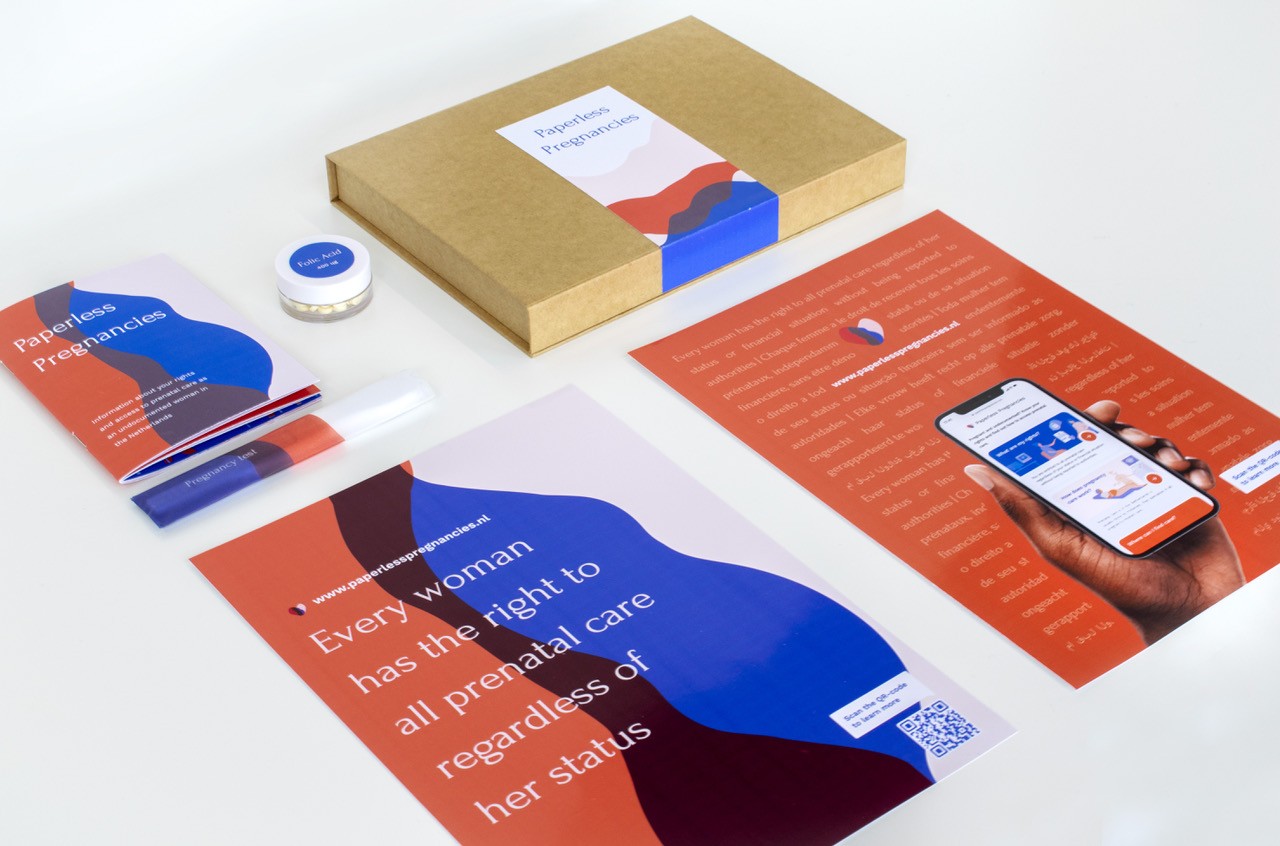
Demi's final master project

Consulting at Deloitte
Demi's final master project
Consulting at Deloitte
Demi's final master project
Consulting at Deloitte
From advicing to staying
Demi wanted to work at Philips after graduating, but the company was going through a difficult period, so she joined Deloitte instead. There, over three years, most of her work sat in healthcare and the public sector, which looked different from what she had known about design so far. She spent her days facilitating workshops, bringing people's thoughts together to help a project or process move forward, more than sketching or building things herself. What she noticed as a consultant is that you advise and then leave, without ever seeing what, if anything, the advice actually changed. That pushed her to look for a role in-house, somewhere she could stay with the results.
Demi wanted to work at Philips after graduating, but the company was going through a difficult period, so she joined Deloitte instead. There, over three years, most of her work sat in healthcare and the public sector, which looked different from what she had known about design so far. She spent her days facilitating workshops, bringing people's thoughts together to help a project or process move forward, more than sketching or building things herself. What she noticed as a consultant is that you advise and then leave, without ever seeing what, if anything, the advice actually changed. That pushed her to look for a role in-house, somewhere she could stay with the results.
Designing inside the system
That search led her to the Dutch Immigration and Naturalization Service, known as the IND, the organization that decides who can stay in the Netherlands. Her work centers on the process of seeking asylum, whether someone is fleeing their country, wants to live in the Netherlands because their family already resides here, or because someone fell in love with a Dutch citizen and wants to be together. It is Demi's job to make sure this process is shaped by more than IT systems and legal requirements alone. While she cannot speak directly with asylum seekers still in procedure, as that would be a conflict of interest, she gathers what she can from asylum lawyers, organizations working alongside them, and people who have already gone through the process. It is not an easy job and sometimes quite conflicting to design the ‘service of seeking asylum’, yet Demi described her and her teammates work drive really to make it more humane.
That search led her to the Dutch Immigration and Naturalization Service, known as the IND, the organization that decides who can stay in the Netherlands. Her work centers on the process of seeking asylum, whether someone is fleeing their country, wants to live in the Netherlands because their family already resides here, or because someone fell in love with a Dutch citizen and wants to be together. It is Demi's job to make sure this process is shaped by more than IT systems and legal requirements alone. While she cannot speak directly with asylum seekers still in procedure, as that would be a conflict of interest, she gathers what she can from asylum lawyers, organizations working alongside them, and people who have already gone through the process. It is not an easy job and sometimes quite conflicting to design the ‘service of seeking asylum’, yet Demi described her and her teammates work drive really to make it more humane.

Working on a user journey

Materials Demi created at the medical startup
Working on a user journey
Materials Demi created at the medical startup
Working on a user journey
Materials Demi created at the medical startup
Trust your own perspective
Working in places where the understanding of design is not yet established has taught her something she wants to pass on. People who do not know much about design tend to be skeptical of it at first, unsure what it is or why it matters, and she has learned that this reaction is not a problem to solve immediately. She uses the assumption that “designing is about making chairs, right?”, which still requires the thought process of its purpose and users; that is still designing. Often, Demi is also the only person of color in a mostly homogeneous team, something she describes as familiar from every place she has worked. As she puts it: "I always knew that when I walked in somewhere, being young, female and a person of color, I had to prove myself before they'd believe I had something important to bring to the table, while for a lot of my colleagues, that was assumed right away." On the other side, she has also noticed that this first impression people have of her also makes her more approachable, easier to trust and confide in, which is valuable when working with whether working with healthcare staff, migrants or new clients. “Give it time, trust your own perspective, and the value [of you and design] shows itself.”
Working in places where the understanding of design is not yet established has taught her something she wants to pass on. People who do not know much about design tend to be skeptical of it at first, unsure what it is or why it matters, and she has learned that this reaction is not a problem to solve immediately. She uses the assumption that “designing is about making chairs, right?”, which still requires the thought process of its purpose and users; that is still designing. Often, Demi is also the only person of color in a mostly homogeneous team, something she describes as familiar from every place she has worked. As she puts it: "I always knew that when I walked in somewhere, being young, female and a person of color, I had to prove myself before they'd believe I had something important to bring to the table, while for a lot of my colleagues, that was assumed right away." On the other side, she has also noticed that this first impression people have of her also makes her more approachable, easier to trust and confide in, which is valuable when working with whether working with healthcare staff, migrants or new clients. “Give it time, trust your own perspective, and the value [of you and design] shows itself.”
Connect or follow up with
Demi
This article was published on
Designers in Full Color - All rights reserved 2026
Designers in Full Color - All rights reserved 2026
Designers in Full Color - All rights reserved 2026